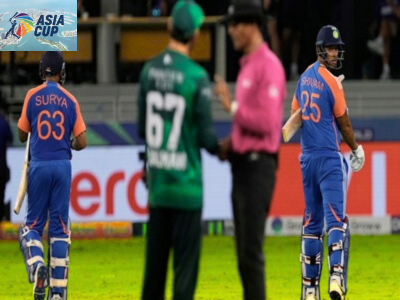
The Asia Cup 2025 was held between India and Pakistan in Dubai on 14 September. The usual formal handshake before and after the toss was not performed during this time. According to the Pakistan Cricket Board, match referee Andy Pycroft instructed Pakistan captain Salman Ali Agha not to shake hands with Indian captain Suryakumar Yadav during the toss.
After the match, the Pakistani team tried to shake hands with the Indian players. But the Indian team left without shaking hands with them.
The Pakistan Cricket Board expressed their strong displeasure, calling the behavior “unsportsmanlike” and arguing that it was against the “spirit of cricket”—a breach of the ICC code of conduct and MCC’s laws.
PCB’s Demand & Threat
Following this, PCB chairman Mohsin Naqvi sent a letter to the ECC demanding Andy Pycroft’s removal from the Asia Cup.
A threat was made that if Pycroft was not removed, Pakistan could be expelled from the next match (against the UAE).
The PCB also claimed that its director of cricket operations, Usman Wahala, did not inform the captain in a timely manner about the “no handshake” policy.
Aftermath & Consequences
Due to refusal to accept Pycroft as referee, Pakistan’s match against the UAE was delayed by nearly an hour, as there was uncertainty about whether they would be able to take the field. Eventually they entered the match under Pycroft.
Pycroft felt regret for it. So he said sorry to Pakistan’s manager and captain (Salman). And calling the incident a misunderstanding. Nevertheless, the ICC has decided that he will continue to serve as a referee for the team.
Possibly due to internal mismanagement, the PCB suspended Usman Wahala, who was the director of cricket operations.
The widespread controversy raised questions about sportsmen, the role of politics in cricket, and the way match officials behave in a high-stress environment. It has sparked a debate about governance.
Reasl Also : Who will Win Asia Cup 2025
Significance & Implications
- Sport vs. Politics: This emphasizes how we spread the political tensions in the match between India and Pakistan. PCB accused the Indian cricket team. That they have dragged politics into cricket. Having refused to shake hands, the Indian camp has protected its behavior by citing board “directives” related to political events.
- Precedent for officials: Pakistan’s demand has been refused by the ICC. Which has become a precedent. Politics and culture cannot be used to remove match officials, except on the clear ground of a major infringement.
- Communication & Protocol: The condition has exposed flows from internally. PCB said that the captain was not informed in advance of the “no handshakes.” Wahala’s suspension suggests the PCB is accepting internal responsibility.
Conclusion
The “no handshake” controversy is not just about a cricket match: it’s about the reputation, trust, and spirit of the game. The ICC’s decision has dealt a significant blow to the PCB, as their demands have been rejected. However, it’s now up to the Pakistan team to decide whether to continue with the tournament or stick to their demands and take action.